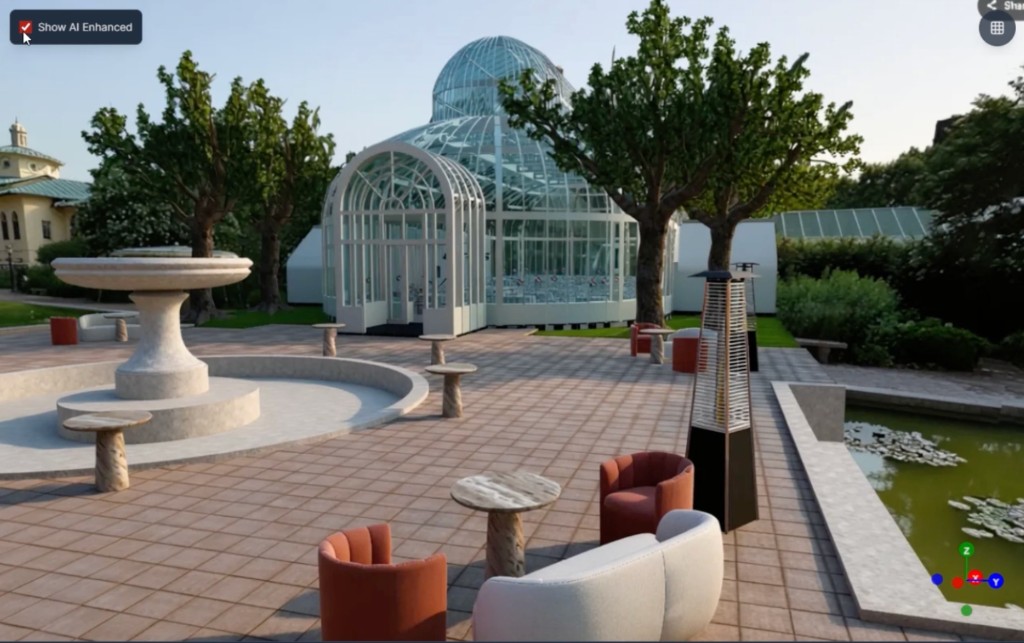
Selling a tent has always required selling something the client can't fully see. A sailcloth structure, a frame tent, a high-peak marquee — these are large, expensive, temporary structures, and the client is usually asked to commit to one based on a spec sheet, a stock photo, and a salesperson's description of “how it'll look on your property.”
That's a hard sell, and it's an even harder design problem. Tents aren't decor — they're structures, with real dimensions, real sidewall configurations, and real interior space that has to accommodate tables, a dance floor, a stage, and a bar without anyone realizing on install day that the numbers don't quite work. It's no surprise that tent rental has become one of the fastest categories to adopt 3D design software — and one where a platform like Event Design App™ is built to make the biggest difference.
The Tent-Specific Problem Generic 3D Tools Don't Solve
Most 3D design tools available to event professionals were built for interiors — furniture, table layouts, decor. Tents are a different category of problem entirely: they're modular structures with their own engineering logic. A frame tent, a pole tent, and a sailcloth structure all behave differently when it comes to sidewalls, peak height, anchoring, and interior clearance.
A rental company using a generic 3D design tool typically has to fake the tent — dropping in a static, non-configurable shape and hoping it's close enough — or skip 3D entirely for the tent itself and only visualize what goes inside it. Neither approach reflects what's actually being sold.
Event Design App takes a different approach with a purpose-built tent builder: frame, pole, sailcloth, and high-peak marquee structures can all be configured directly, with sidewalls, interior layout, and drape designed against the tent's real structural dimensions — not a placeholder shape standing in for the real thing.
True Scale Is the Difference Between a Nice Rendering and a Sellable One
A tent rendering that looks impressive but isn't built to real scale creates exactly the kind of problem tent rental companies dread: a structure that doesn't fit the yard, a dance floor that crowds the seating once the tables are actually placed, or a sidewall configuration that turns out to block the one view the client cared about.
This is where Event Design App's approach to scale matters most for tent-specific sales. Its true-to-scale tools let a designer upload a venue floor plan or a Google Maps aerial image of the property, calibrate a single wall or reference measurement, and have the entire space — including the tent itself — scale automatically. From there, the tent's frame, sidewalls, and interior are all placed using the property's actual dimensions, not an approximation.
The company's own internal shorthand for this is simple: measure one wall, let AI scale the whole venue. For a tent sale specifically, that means a client can see, before signing anything, that a 40x80 frame tent with a serpentine bar and a 20x20 dance floor genuinely fits their backyard — not just that it looks like it might.
Selling the Interior, Not Just the Structure
A tent quote rarely stops at the tent itself. Sidewalls, interior drape, lighting, staging, and furniture are usually part of the same conversation — and usually the source of the most back-and-forth in a traditional sales process, since each addition typically means a manual re-quote.
Because Event Design App is built on a Connected 3D model, every addition to the tent's interior — an extra cocktail table, upgraded drape, a small stage for a band — is tied to the company's actual inventory and pricing the moment it's placed. The itemized quote updates as the design changes, instead of requiring a separate pass once the meeting ends. A client can walk through a fully dressed, photorealistic version of their tented event on a first call and leave with a real, accurate number — not a rough estimate that gets revised twice before it's signed.
Why This Matters More for Tents Than for Almost Any Other Rental Category
Tents carry disproportionate weight in a rental company's business relative to almost anything else in the catalog. They're typically the largest single line item on a quote, the hardest to install and remove if something's wrong, and the most weather- and permit-sensitive product a rental company sells. A mistake here is expensive in a way a miscounted chair order simply isn't.
That's part of why tent-specific 3D design has become such a clear differentiator rather than a nice-to-have. Rental companies that can show — accurately, at true scale — exactly how a tent and its full interior will sit on a client's property tend to close tent deals faster and revise them less, because the guesswork that used to happen after the sale has already happened, visually, before the contract is signed.
What a Modern Tent Sales Workflow Looks Like
With a platform like Event Design App, a typical tent sale increasingly looks like this:
- Upload the venue. A floor plan or Google Maps image of the property is imported and calibrated to true scale using a single measurement.
- Build the tent. The appropriate structure — frame, pole, sailcloth, or high-peak marquee — is configured to the client's specifications, with sidewalls and interior space defined against real dimensions.
- Design the interior. Tables, staging, drape, lighting, and decor are placed inside the tent using the company's actual 3D-modeled inventory.
- Present and quote, together. The client sees a photorealistic walkthrough of the finished event, with the itemized quote building itself alongside the design in real time.
- Hand off accurate specs. The same true-to-scale design gives the setup crew real measurements to work from, rather than a separate technical drawing built after the fact.
What used to be a multi-day process — sketch, quote, revise, re-quote, hand off to ops — collapses into a single working session.
The Bottom Line for Tent Rental Companies
Tents are one of the hardest things in the event industry to sell sight-unseen, and one of the most expensive categories to get wrong. 3D tent design software built specifically for the structures rental companies actually rent — rather than generic interior visualization tools — is quickly becoming the standard rather than the exception.
Event Design App's tent builder, combined with its true-to-scale mapping and Connected 3D quoting, is built around exactly this problem: giving tent rental companies a way to design, price, and sell a tented event as accurately and quickly as they'd sell anything else in their catalog — without the guesswork that used to come standard with the category.